
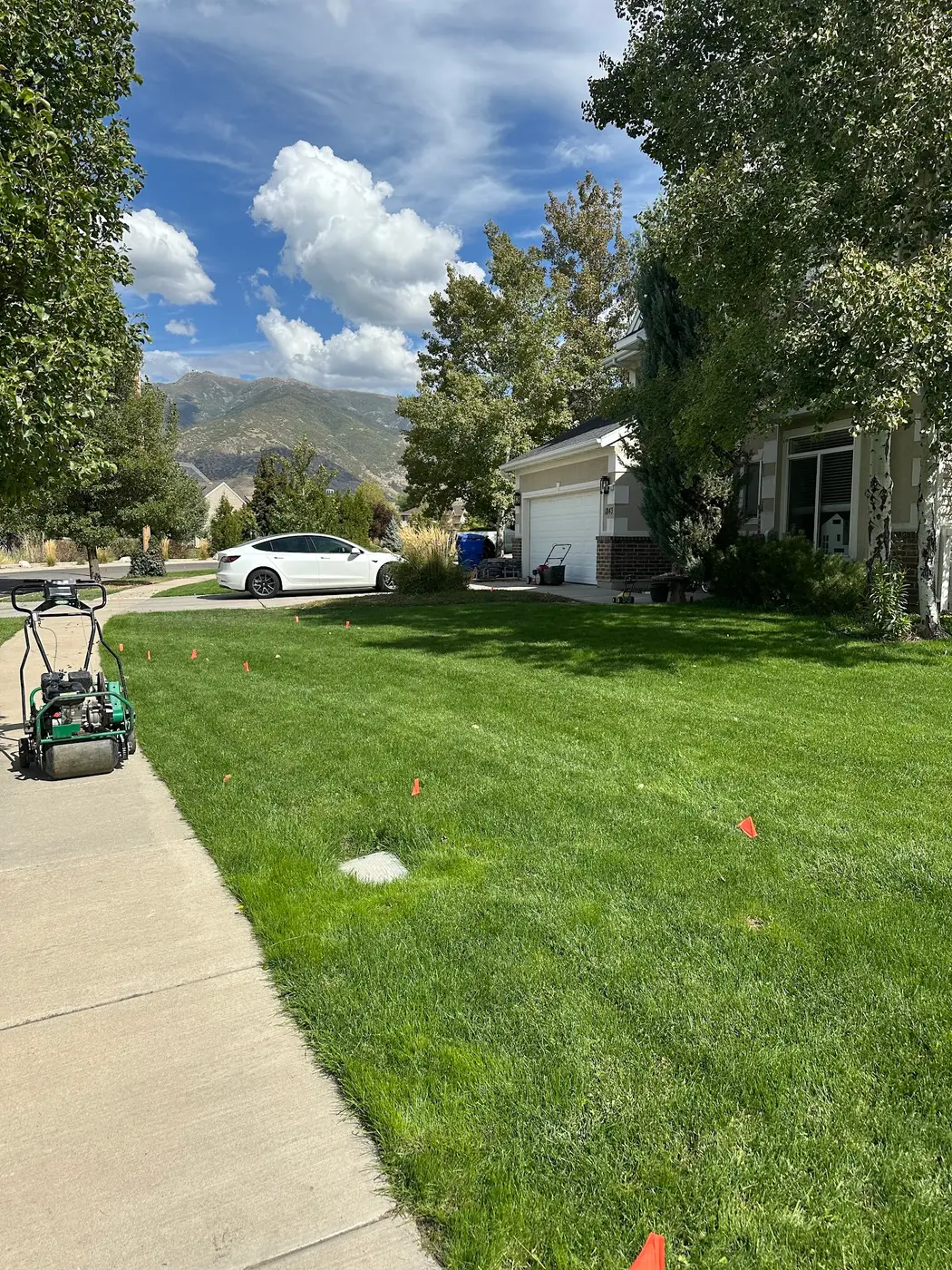
Why this combo works so well
Overseeding on its own is a bit of a gamble. Seed thrown onto hard, compacted ground mostly sits on the surface where it dries out, washes away, or feeds the birds. Aeration changes the odds. Every hole the machine leaves behind is a small, protected pocket of loose soil, exactly where a seed wants to be.
Doing both in one visit means the seed lands in the best possible seedbed, roots grow into soil that is finally loose enough to explore, and you pay for one trip instead of two. It’s my most requested service for a reason.
Who it’s for
- Lawns that have gone thin, patchy, or tired over the years
- Yards with bare spots from dogs, kids, or summer heat
- Shady areas under mature trees where grass struggles
- Older lawns that could use newer, tougher grass varieties
- Anyone who wants a thicker lawn without the cost of new sod
The right seed for northern Utah
Davis County lawns are cool-season lawns. Most are Kentucky bluegrass, often blended with perennial ryegrass or tall fescue. I use seed blends suited to our climate and match them to your yard, with shade-tolerant mixes for spots under trees and tougher blends for high-traffic areas. Thick turf also helps crowd out weeds naturally.
Best timing
Early fall is the ideal window in Davis County. Warm soil speeds germination, cooler air is easier on young grass, and fall weeds and heat are less of a threat. Spring overseeding can work too, though new grass has less time to mature before summer. Not sure which is right for you? Ask me. I’ll give you a straight answer.
Want to give that new seed an extra push? Add a starter fertilizer to the same visit.